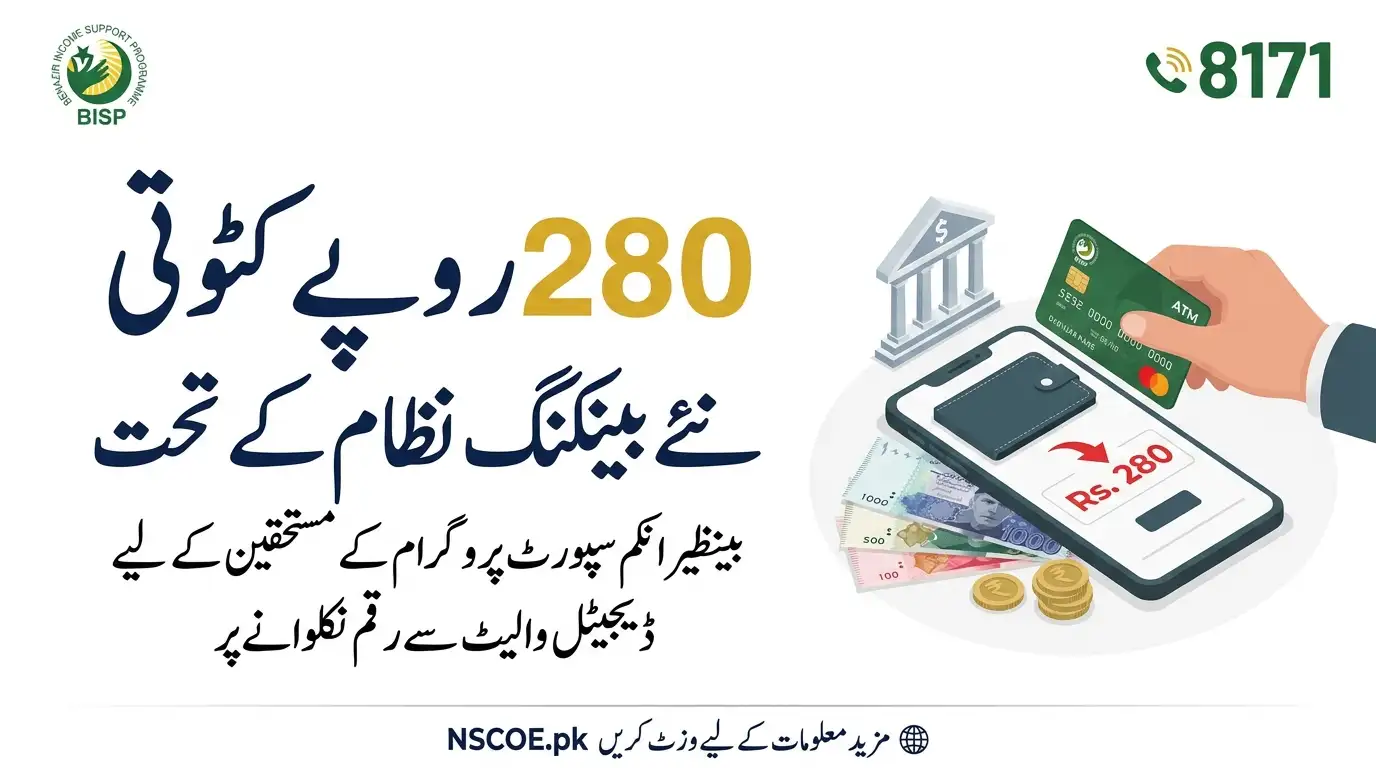
The Benazir Income Support Programme (BISP) is introducing a new digital wallet system that will allow beneficiaries to receive and manage their payments through multiple banks. However, under the latest update, BISP beneficiaries will face charges for digital wallet cash withdrawals, while online transfers and RAAST transactions will continue to remain free.
The update was shared during a meeting of the National Assembly Standing Committee on Poverty Alleviation and Social Safety, where officials from the State Bank of Pakistan (SBP) and BISP briefed lawmakers on the progress of the programme’s digital transformation.
BISP Digital Wallet Update at a Glance
| Details | Information |
|---|---|
| Programme | Benazir Income Support Programme (BISP) |
| New System | Digital Wallet Interoperability |
| Cash Withdrawal Fee | Rs. 280 Per Transaction |
| Online Transfers | Free |
| RAAST Transfers | Free |
| Full Digitalisation Target | 31 December 2026 |
Rs. 280 Withdrawal Fee to Apply
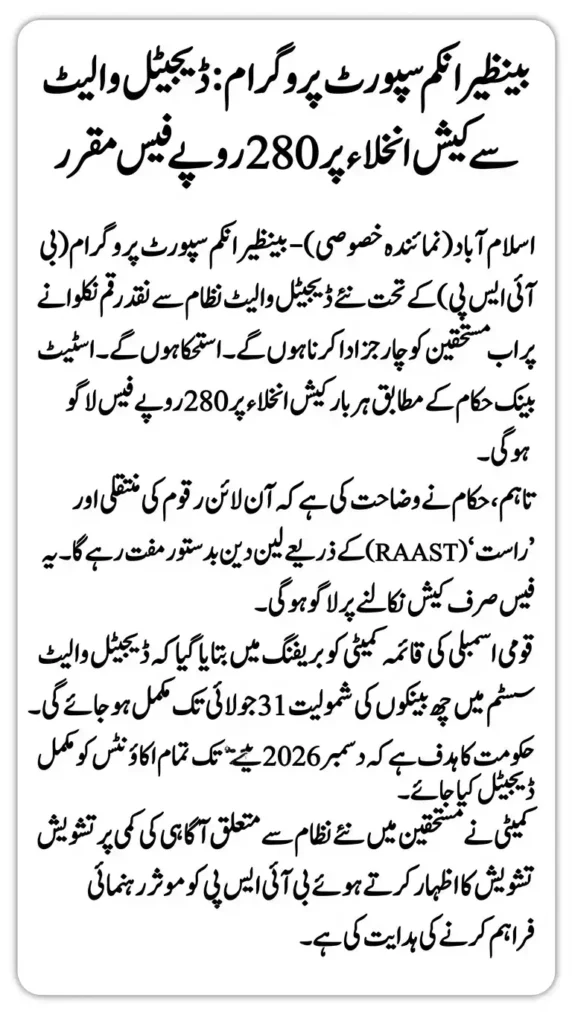
During the committee meeting, SBP Deputy Governor Saleem Ullah informed members that beneficiaries will be charged Rs. 280 whenever they withdraw cash through the new digital wallet system. He also explained that the State Bank of Pakistan will issue an updated schedule of transaction charges every six months.
Officials clarified that the fee applies only to cash withdrawals. Beneficiaries who transfer funds digitally or use RAAST for transactions will not have to pay any charges.
Digital Wallet Integration to Finish This Month
According to the briefing, the rollout of the digital wallet system is progressing in phases. Two additional private microfinance banks are expected to complete integration by 16 July and 20 July, while all six participating banks are scheduled to become fully interoperable by 31 July.
The government expects the new system to give beneficiaries greater flexibility by allowing them to access their payments through multiple banking partners instead of relying on a single payment channel.
Full Digitalisation Planned by December
Officials informed the committee that all BISP beneficiary accounts are expected to become fully digital and support online functionality by 31 December 2026. The move is part of the government’s broader effort to modernise social welfare payments, improve transparency, and reduce delays in payment distribution.
Committee Raises Concerns Over Public Awareness
Members of the parliamentary committee expressed concern that many beneficiaries are still unaware of how the new digital wallet system works. They also highlighted weaknesses in the implementation process and asked BISP to improve coordination with partner banks.
The committee directed programme officials to strengthen monitoring mechanisms and ensure that beneficiaries receive proper guidance and banking support during the transition to the digital payment system.
Compensation Mentioned During the Meeting
During the same meeting, officials also discussed the Rahim Yar Khan distribution centre incident that occurred earlier this year. The committee was informed that a private microfinance bank had been penalised for negligence following the tragic roof collapse.
According to BISP officials, compensation of Rs. 2 million was paid to the family of each deceased beneficiary, while Rs. 500,000 was provided to every injured individual for medical treatment. The compensation amount was recovered from the responsible bank.
What BISP Beneficiaries Should Know
Beneficiaries who plan to withdraw their payments through the upcoming digital wallet system should be aware that a Rs. 280 transaction fee will apply to cash withdrawals once the new banking model becomes operational. Those who choose digital transfers or RAAST payments can continue using those services without additional charges.
As the transition continues, beneficiaries are advised to follow official announcements from BISP and the State Bank of Pakistan for updates regarding participating banks, transaction charges, and the nationwide rollout schedule.